Thursday, April 30, 2009

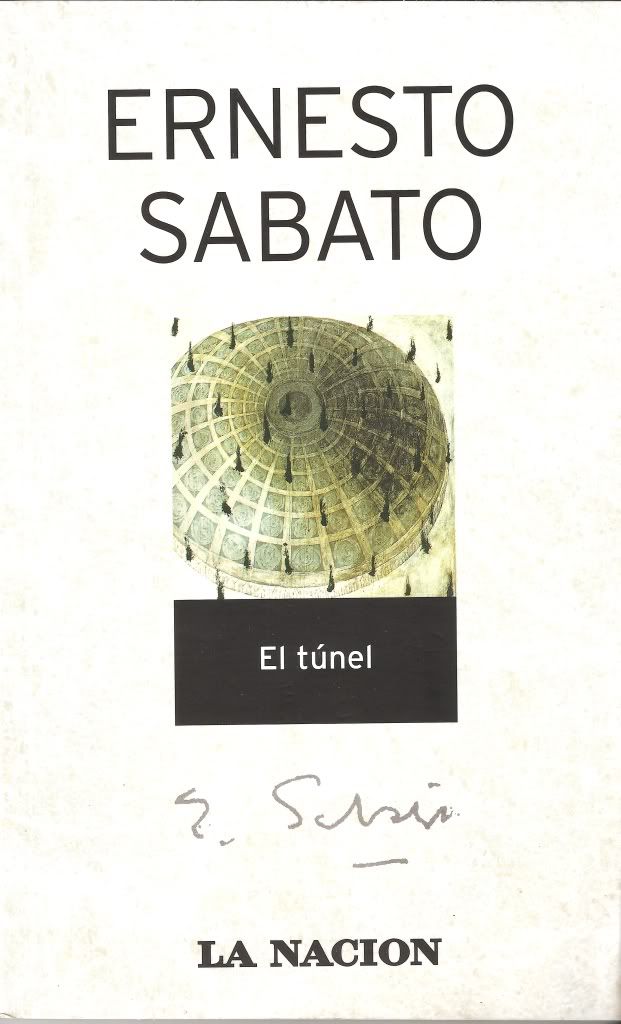
The Tunnel (26/81)


Ernesto Sabato's The Tunnel is the first person account of an artist's murder of the one person who understood him best. At an exhibition, Juan Pablo Castel notices a woman captivated by the window that takes up a small section of one of his finished paintings. She is the only person who appears to have realized the importance of the window, which leads to him becoming to become slowly and utterly fixated on her.

He seeks her out in a somewhat roundabout matter, finally running into her seemingly by accident. He learns that she has been thinking about his painting all the time since that showing. They become romantically involved, but Castel feels she is not being completely honest with him. He begins to suspect she has other lovers, perhaps even that he´s just a plaything to her. He becomes increasingly obsessed with possessing her until his actions cross over into derangement.

This is a novel about obsession and man's futile struggle for meaning, and it is no surprise that Camus found it important enough to have translated into French. I must admit I was not entirely captivated by the story. Though I'm fond of eccentrics in literature (especially the obsessive kind), I often found Castel's obsessiveness more irritating than contagious. I also felt the metaphor of the tunnel as reflecting the essential loneliness of human existence was a bit on the literal side.

So, overall an interesting look at one man's obsession and how it reflects modern man's fruitless search for connection, but not entirely satisfying.

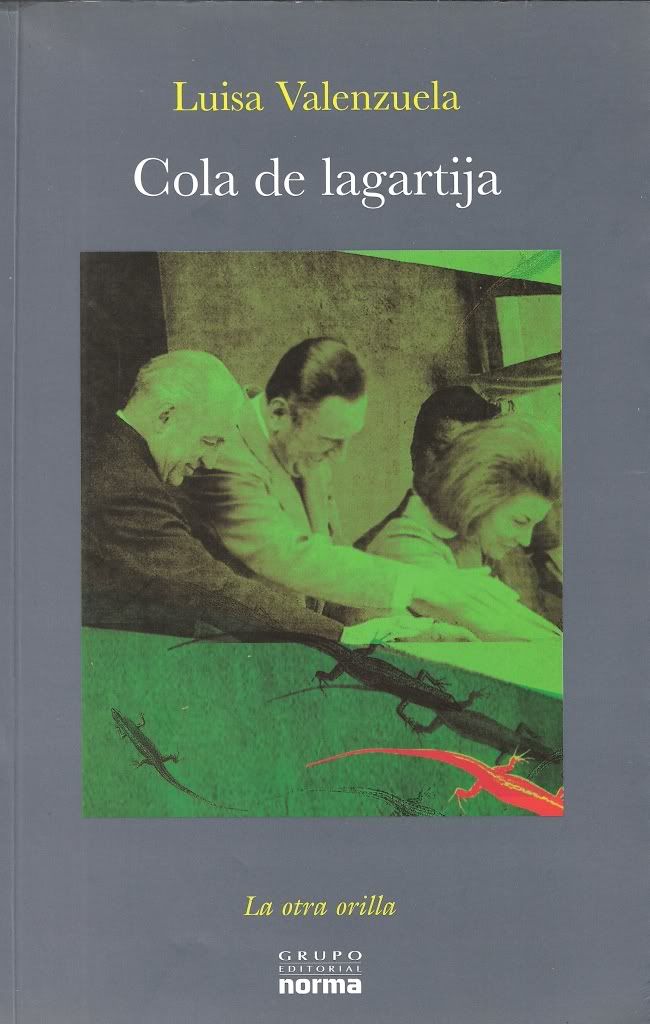
The Lizard's Tail (25/81)


When Juan Peron returned to the Argentine presidency for the last time in 1974, he brought along two intimates who would go on to create some trouble. The first was his third wife Isabela, who would ascend to the presidency after his death. The second was Jose Lopez Rega, a character so odd it seems hard to believe he was not invented by Arlt or Borges. Rega was fascinated with occult and mystic arts, including Umbanda (like Santeria or Voodoo) and astrology. His interests earned him the nickname El Brujo, not inappropriate given the Rasputin-like hold he had on Peron and later Isabela. It was under Rega that Dirty War began, which was run out of the Office of Social Welfare under the auspices of the triple-A. (Argentine Anticommunist Alliance)

The Lizard's Tail is based loosely on Lopez Rega, parting ways with the historical facts of Lopez Rega to create a surreal and disturbing meditation on violence and power. After the fall of Isabela's government, El Brujo heads to his childhood home of Laguna Negra in northern Argentina with his followers. Here he organizes new rituals of blood and sacrifice, and stages a very twisted orgy to which he invites prominent members of Argentine society.

Even in internal exile, he is dangerous enough to inspire enemies, among them the ruling junta, a revolutionary, and an author working on El Brujo's biography. The revolutionary and the author have a brief relationship, during which the revolutionary asks the author to finish her book by killing off El Brujo. But can she really pull it off in such a way as to kill the original?

El Brujo soon finds a new enemy in the mayor of the town of Capivari and its little newspaper. He takes over the town and the newspaper, changing the emphasis of the latter to occult themes. This inspires in him the plans for a new ritual, an immaculate conception which will cleanse Argentina in a river of blood.

I was expecting a touch of the strange, perhaps even some magic realism, when I started this book, as can only be expected from a story based on an already strange individual. But the story is strikingly surreal, often disturbing or funny, presenting an exaggerated look at the relationship between power and violence, and the role of the journalist or writer in responding to the terrible.

Wednesday, April 29, 2009

James Herriot's Dog Stories - 75/81

James Herriot's Dog Stories, by James Herriot, audiobook category

I have been a fan of James Herriot for years. I read the whole series. And I loved the series 'All Creatures Great and Small,' which I thought exactly captured the things I loved best about the books. The casting of Tristan in particular was brilliant! This audiobook features Christopher Timothy, who played James Herriot in the TV series, as the reader. He does a great job as reader and in getting the various accents just right.

This is a rather brief book, but captures some of my favorite stories from the series, including Tricki Woo, the spoiled Pekinese and his quite nice delusional mistress, who regularly speaks with - and hears replies from - her beloved pet. I also loved the story about the poor dog rescued from a terrible life of neglect and about Herriot's own dogs.

If you are a fan of the series, I think you would really enjoy the audio version. It had me laughing away as I was listening and got my kids listening too. Their clear favorite was Tricki Woo, and they were anxious to see what goofy thing would happen next. Lots of fun!

Talk Talk by T C Boyle (45/81)

Category: The Complete Works of T C Boyle

A deaf woman, Dana, is the victim of identity theft and when the police fail to help, she and her boyfriend set off to find the criminal themselves. Boyle creates great characters and then really makes them suffer!

Like many of his other books, the narrative is divided between characters, swtiching between Dana, her boyfriend and the criminal. The criminal is not what you might at first expect either, and although I didn't ever quite feel sympathy for him, he was more than just a stereotypical bad guy. As well as gripping plot, the book addresses attitudes towards people who are different and is at time genuinely moving.

Definitely my favourite Boyle book of the challenge so far.

The Tango Singer (24/81)

Bruno Cadogan is writing a dissertation on Borges' view of the tango--especially the older, less sentimental tangos Borges would have heard in his youth--when he hears that in Buenos Aires there is a man, Julio Martel, who sings the tango in this older style. Since no recordings exist of Martel's singing, Bruno heads to Buenos Aires to seek him out personally.

When he lands in Buenos Aires, he finds a room for rent in the very same building which housed Borges' Aleph in the story of the same name. From here he begins his quest for Martel, which turns into a labrynthine wandering through Buenos Aires in time and space. Martel, it turns out, has decided to forgo a career in order to use his tango singing to mark off places and events in the city that hold some particular meaning for him. He also becomes fascinated by the possibility of finding the Aleph in the house where he is staying.

This labrynthine wandering was the strongest aspect of the novel, and I really appreciated how Martinez explored and even celebrated the city of Buenos Aires and its lengthy and often tragic history. I cannot say if someone who has never visited the city would feel something similar, but I would certainly hope that the book would provide some motivation for planning a visit.

The novel did have a couple of flaws. Bruno Cadogan is meant to be an American, but he really thinks and acts more like an Argentine. While a minor flaw, it does cost the novel some verisimilitude. For me the larger flaw was that the novel was almost too Borgesian (never did I thought I would say that) in its use of allusions and homages to the point where it almost became distracting. (Bruno himself seems an obvious homage to Cortazar's "The Pursuer," also about a writer named Bruno fascinated with a troubled musician whose art allows him to experience time differently.)

Despite these flaws, I still found it a captivating read and greatly enjoyed its wanderings through the mazes of space and time which make up the reality of Buenos Aires.

Money to Burn (23/81)


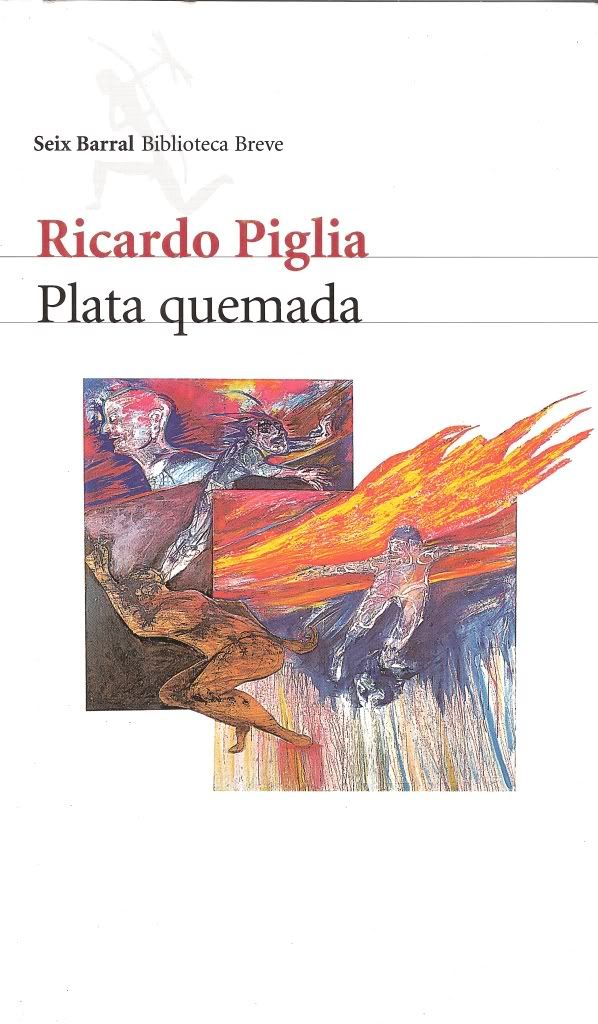
A group of Argentine criminals have got what could be a great heist planned out. They will grab the municipal payroll in a daring daytime robbery, then cross the river and slip into Uruguay until the heat dies down. The gang includes Gaucho Dorda and Nene Brignone, who are lovers; Cuervo Mereles, who swaggers with outlaw charisma; and Malito, a cold-blooded and calculating man and their defacto leader. The robbery goes off as planned, but they soon find themselves on the run, guns blazing as they drive their getaway car through the streets of Buenos Aires. Though the events related in Money to Burn seem outrageous enough to belong to a Tarantino film or a pulp crime novel, Ricardo Piglia as invented nothing in this hypnotizing tale of crime, loyalty and vengeance.

Piglia has a minor personal connection to the story, having met Mereles' ex-girlfriend in 1966 while on a train ride to Bolivia. During the trip, she told Piglia a confused and seemingly incredible story of the man she had been in a relationship with and the crimes he had been involved in. Though he never saw her again, he became fascinated by the story and began to research and attempt to write about it. It was a project that he ended up setting aside for the better part of two decades, only to return to and finish later.

Money to Burn is a novelistic retelling of true events, with Piglia acknowledging where the historical record is ambiguous or incomplete. The only license taken is in the extent to which we get inside the heads of those involved, not just the criminals but also the police who are hunting them. What emerges is a fascinating portrayal of criminality and politics in Argentina and Uruguay of the 1960s, as well as an unforgettable portrayal of characters far outside the pale.

Tuesday, April 28, 2009

I Capture The Castle by Dodie Smith


Category: Books that became the basis for Movies/Television
(3/81)

My sister sent me this enchanting book while I was enduring a very confusing and painful time in my life.  Although my sister had not read the book herself, it was the perfect book at the perfect time. 
Smith's character Cassandra keeps her diaries as she grows up on a very unusual estate that was an old castle.  I love the first line where Cassandra states she is writing while sitting in the kitchen sink.  This completely sets the mood and tone of the book. Her family lives off the royalties of her father's groundbreaking and best-selling novel. Unfortunately, these funds are running low and the family is growing desperate in their financial needs. The father is questionably a genius or lunatic. His wife has passed away and he has remarried a very sweet and beautiful woman named Topaz. 
Cassandra is very close to her older sister, Rose, who decides the best way out of the predicament is to marry for money. Lo and behold the very wealthy Cotton family, including two American brothers come into their lives and add lots of intrigue.  There is also the handsome Steven, who is head over heels for Cassandra, although his love is unrequited. Cassandra falls in love with someone she shouldn't, an unrequited love as well.  All the different emotions create much more than love triangles, more like confusing love octagons, stars, or squiggles! Needless to say all these loves turn into a lovely mess that Smith writes with incredible humor and sensitivity. 
Wonderfully written, clever, and compassionate.  For all of us who love, have loved and will love this is a book to empathize and fall in love with the characters.